
Finish It Exterior vs Interior Guide
Same plaster loop, different surfaces — brick outside, tile inside.
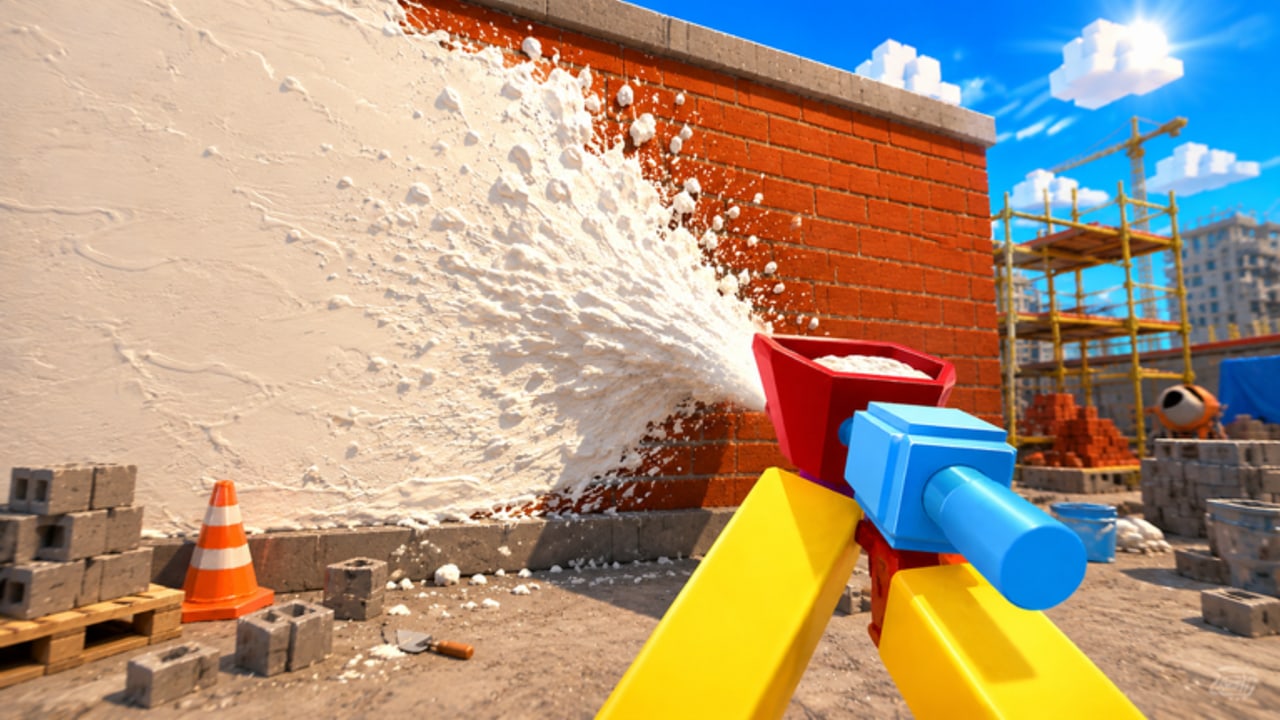
Finish It surfaces split into two families: exteriors (brick, siding, stucco) and interiors (tile, drywall, concrete). The plaster loop is identical — spray, trowel, paint — but the angles, the tools, and the pain points differ. This guide covers what changes between the two so you do not treat the kitchen like the front facade.
Exterior surfaces
Brick is the most common exterior and the best tutorial surface. High contrast means you see every miss. The mortar lines want to show through a thin coat, so overlap strips generously and trowel with the blade flat to hide them.
Siding (if your lot has it) is smoother than brick and needs less coat. Over-spraying siding wastes ammo. One thin even pass is enough; two passes is a waste.
Stucco is rough and absorbent. It drinks plaster the way brick does not. You will use more ammo per square meter on stucco than on any other exterior surface. Plan tank refills before you start, not mid-wall.
Scaffolding and high walls are exterior challenges, not different surfaces. Buy movement speed before you commit to a two-storey job. Jumping while spraying is the fast track to stipple.
Interior surfaces
Tile is the most common interior and the most forgiving surface to trowel — the grout lines and plate bosses give you natural guides. Spray in strips across the tile field, overlap generously, then trowel along the grout lines rather than across them.
Drywall (if your lot has unfinished interior walls) is the most absorbent interior surface. It drinks plaster faster than exterior brick. Thin coats, quick trowel passes. If you tank is low, do not start a large drywall section.
Concrete (basement or garage interiors) behaves like a hybrid of brick and tile. Spray, trowel flat, check for pitting.
The carry tax
Interiors punish low carrying capacity. Between stacks of plates and the walls you are coating, you will make many trips if carry is rank zero. Infinite Plates or the cash carry upgrade is the interior quality-of-life purchase — it is less dramatic than Infinite Spray but it changes how you experience hallway work.
Which to do first
Exteriors first in the completion order. They teach the gun, photograph from spawn, and stop the lot from looking abandoned. Interiors are the mid-game session once spray technique is solid and upgrades are buying you speed.
On a co-op server, split by zone: exterior crew and interior crew. Do not send everyone to the front facade and leave the kitchen untouched.
Spray angle differences
Exteriors: you usually stand off the wall at a 30–45 degree angle. Interiors: you are closer, often perpendicular to the wall because the room is tighter. In a narrow hallway, you may be spraying almost parallel to the wall surface.
The trowel angle is also different. Exterior brick: blade flat, follow mortar lines. Interior tile: blade flat, follow grout lines. Interior drywall: lighter pressure because the surface is softer.
Climate and lighting
Interiors dry differently than exteriors. In a closed room with limited airflow, plaster sets slower. This is usually good — it gives you more trowel time — but if the lot is in a hot climate or direct sun, exterior surfaces can set faster than you expect and force you to work quicker.
Neither surface responds well to rain in the game world, but if you are playing in a hot real-world room, the interior humidity from your own breath can affect set times. This is not a real physics problem, but players who notice trowel timing often cite “hot room” as a variable.
The hybrid surfaces
Pool concrete, stairs, and decorative features are neither pure exterior nor pure interior. They follow interior technique (smooth, thin coats, careful trowel) but require the exterior mindset (large spans, tank management). The pool guide covers the pool specifically.
Start on exteriors. Graduate to interiors. Save the pool for when you understand your tank.
Frequently Asked Questions
Quick answers for Finish It players.
Should I do exterior or interior surfaces first?
Exteriors first. They are better tutorials, look better from spawn, and build the muscle memory that interiors then refine.
Why does my interior plaster seem to set slower?
Interior rooms have less airflow than outside. Plaster sets by drying, so closed spaces slow the cure. This is usually an advantage — more trowel time.
Is Infinite Plates worth it for interior work?
Yes, if you are doing more than one interior room. The carry tax is real and the pass eliminates a frustrating F2P grind.
What's the hardest interior surface?
Drywall absorbs plaster faster than tile and requires thinner coats. Large drywall sections can drain a tank quickly.